Scaling Trauma Psychotherapy Practice with Digital & AI Transformation
PROJECT:
Digital & AI Transformation
CLIENT:
Wholetherapy
SKILLS:
Brand Positioning, Digital Governance, Market Research, Digital Audit, Patient Journey Mapping, Website Development, Omnichannel Marketing, Patient Engagement Strategy, AI-Assisted Operations.
SNAPSHOT
Discover how I helped Wholetherapy, a trauma-informed EMDR psychotherapy clinic, scale access to care by introducing PIPEDA-compliant AI-assisted workflows and a brand narrative designed around the cyclical nature of trauma recovery—improving clinician utilization, reducing no-shows, and increasing patient re-engagement.
THE CLIENT
Wholetherapy is a trauma-informed psychotherapy clinic in Nova Scotia specializing in EMDR and complementary modalities for individuals navigating trauma, relationship challenges, and emotional distress. As demand for trauma-informed care grew, the clinic faced a common challenge in mental health services: expanding access to care while protecting clinician capacity and maintaining high-quality treatment.
THE BUSINESS CHALLENGE
Uneven clinician utilization: Underused daytime and virtual EMDR capacity existed alongside overloaded clinician schedules and rising burnout risk.
Episodic treatment patterns: Trauma therapy often unfolded in cycles, with patients pausing or disengaging, making it difficult to distinguish healthy pacing from silent dropout.
Fragmented patient engagement systems: Intake, scheduling, and follow-up communication relied on disconnected tools and manual processes, creating operational burden.
Limited visibility into patient flow: Without integrated systems, clinic leadership lacked clear insight into utilization, patient engagement patterns, and re-entry opportunities.
THE SOLUTION
I.Trauma-Informed Brand Positioning
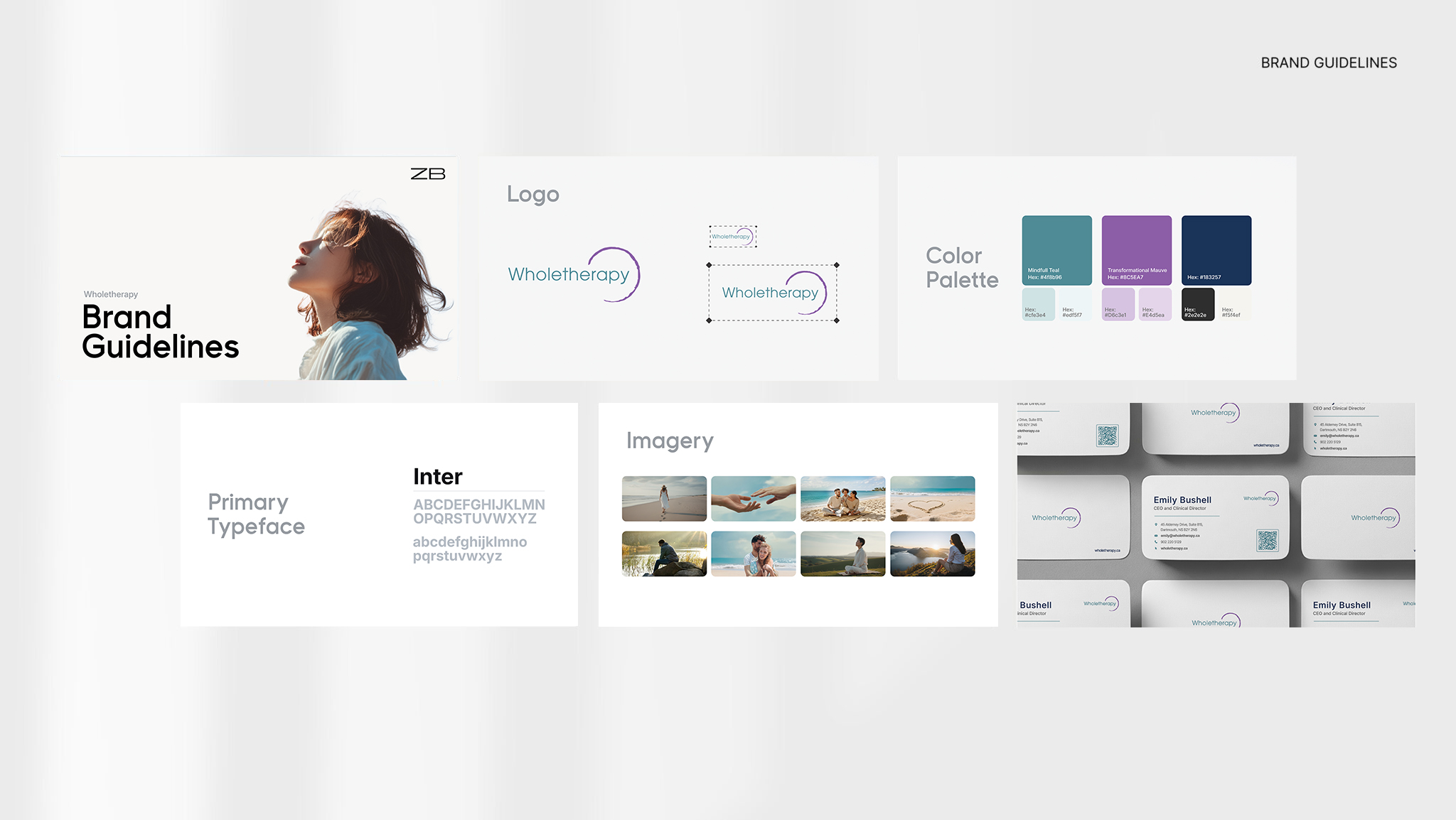
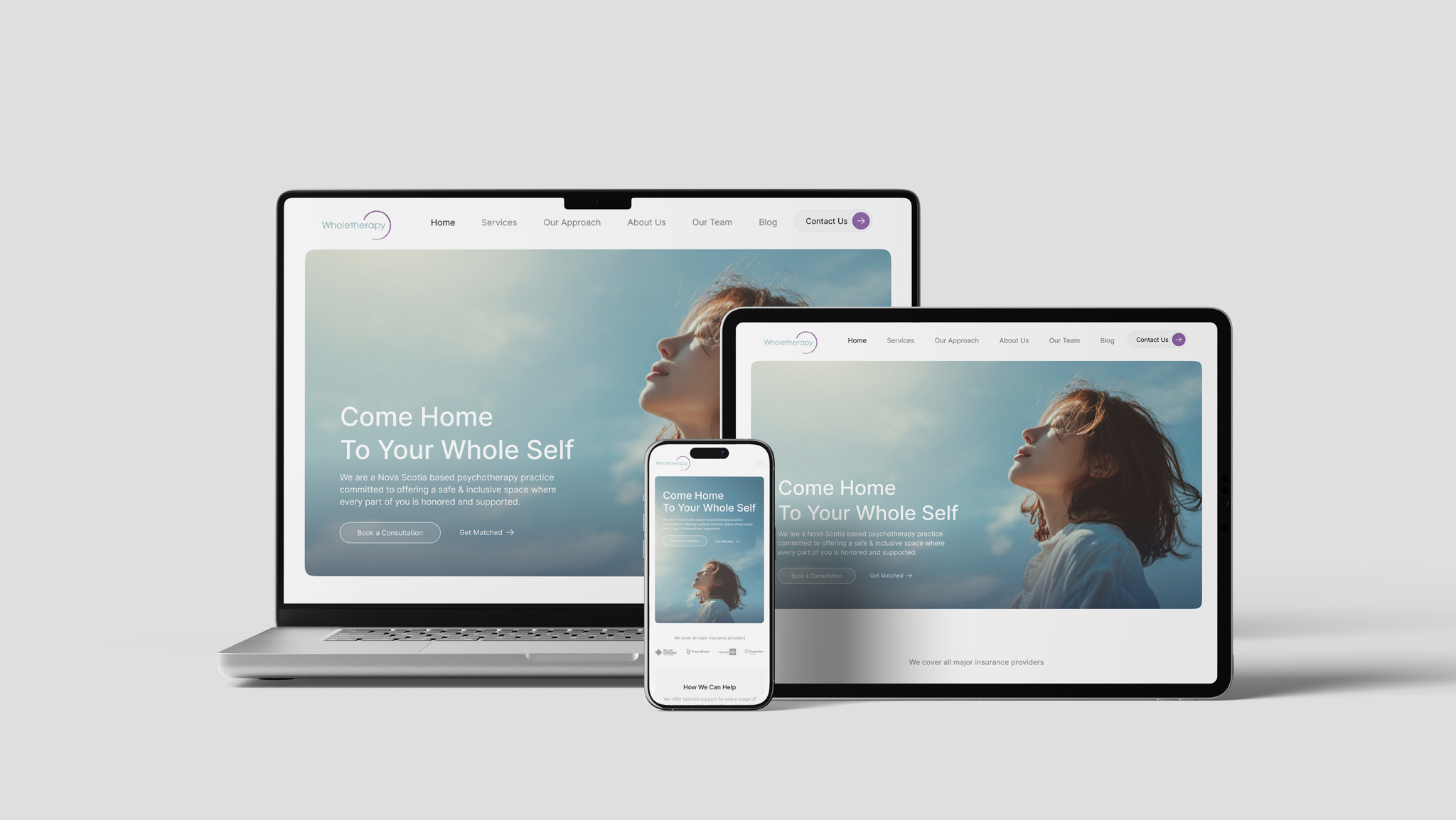
Wholetherapy was repositioned as a clinic that recognized the cyclical nature of trauma recovery. The brand narrative, “Come Home to Your Whole Self,” normalized pauses and restarts as expected parts of the healing journey rather than signs of failure.
A redesigned visual identity emphasized psychological safety through calming colors, whitespace, and identity-affirming imagery. Content adopted a warm, conversational tone—similar to how a thoughtful therapist might speak—reducing intimidation and making it easier for clients to begin or resume therapy.
II.Intelligent Patient Engagement System
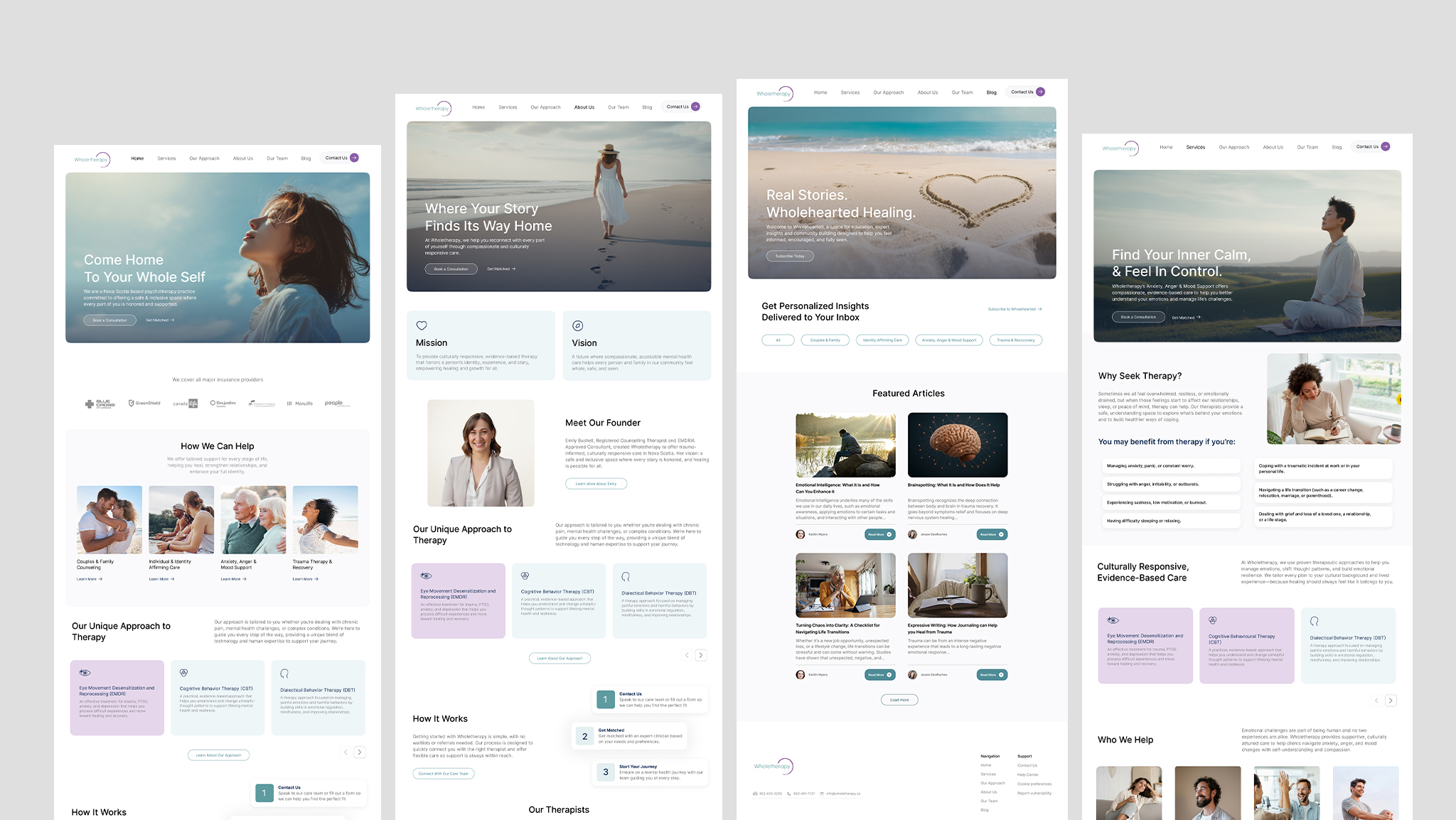
The digital experience was redesigned around recognizable pathways into care, including being new to therapy, returning after a break, feeling stuck after trauma, or navigating emotional and relationship distress.
Hybrid care options presented both in-person and virtual care as clinically appropriate entry points, improving utilization of underused daytime and virtual capacity. Patient workflows were mapped to known “wobble points” in trauma treatment—moments when clients commonly pause or disengage—allowing supportive, PIPEDA-compliant follow-ups to maintain continuity of care.
III. AI-Assisted Workflows with Human-in-the-Loop
AI-assisted systems supported operational efficiency without interfering with clinical decision-making. The system flagged patients who had paused treatment or submitted inquiries without booking, enabling clinicians to send trauma-sensitive outreach that respected the client’s autonomy to enter or re-enter care when ready.
Scheduling and routing workflows matched patients with clinicians based on training level, availability, and therapeutic fit, helping balance caseloads and protect therapists’ well-being. Ethical AI policies ensured that automation supported only administrative workflows, while clinical assessment and treatment decisions remained clinician-led.
THE IMPACT
Increase in daytime utilization
0%
Reduction in no-shows
0%
Lift in patient engagement
%
KEY TAKEWAYS
Trauma care is cyclical, and clinics must design systems that support pauses and re-entry into therapy.
EMDR-focused language reduces stigma and strengthens patient trust, engagement, and retention.
Ethical AI should support operations with clinicians remaining fully in control of care decisions.
Intelligent scheduling and balanced caseloads protect therapist capacity while improving continuity of care.